
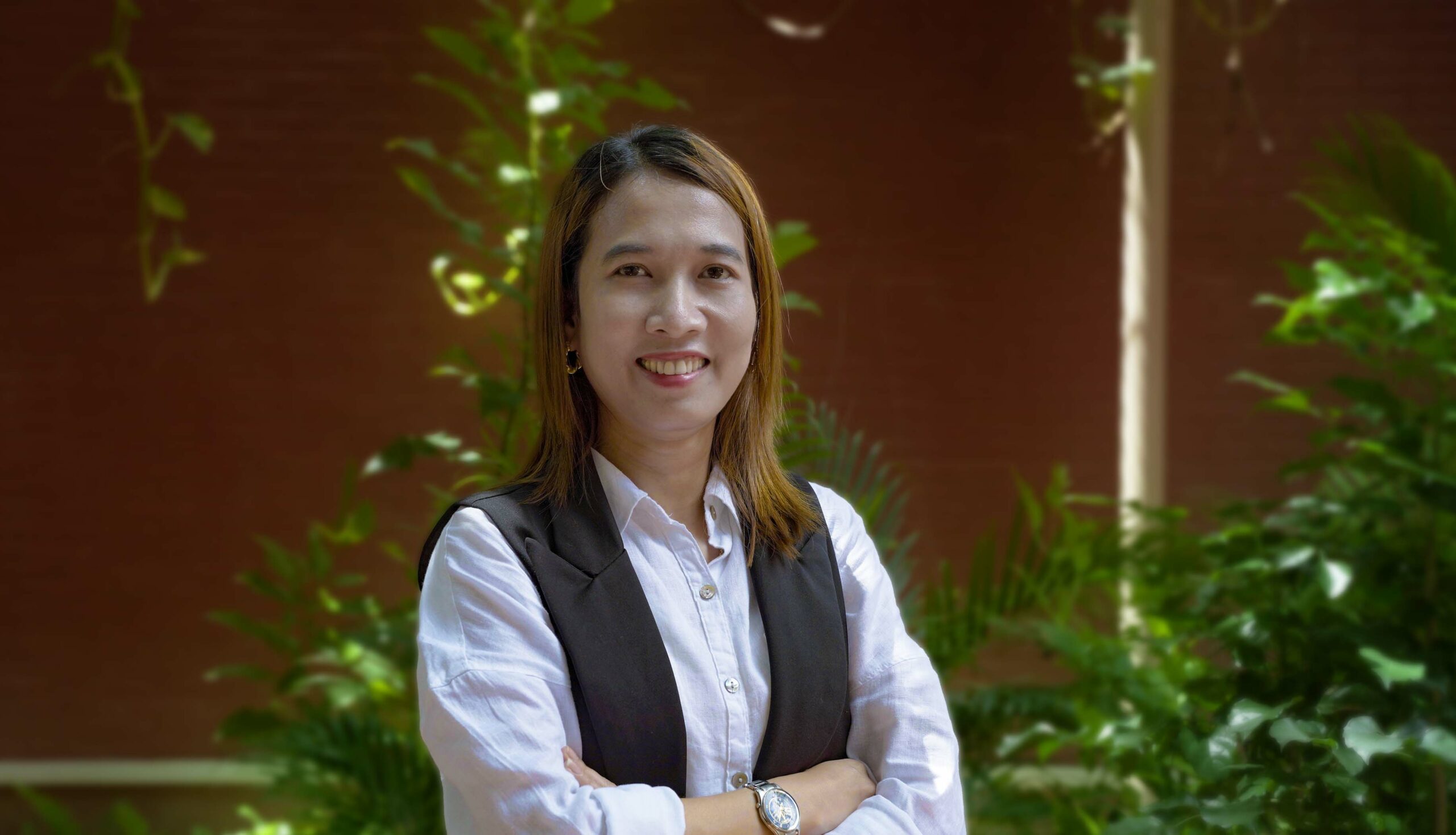
Fourteen years of being part of Cambodia’s evolving art community have shaped Yon Sokhorn’s leadership. Now, she steps forward with humility, vision, and a commitment to reimagining the present and future of Cambodian arts. Her mission is clear: to support local artists to be able to share their creative work regionally and internationally, expand partnerships as a form of sustainability, and continue nurturing grassroots initiatives.
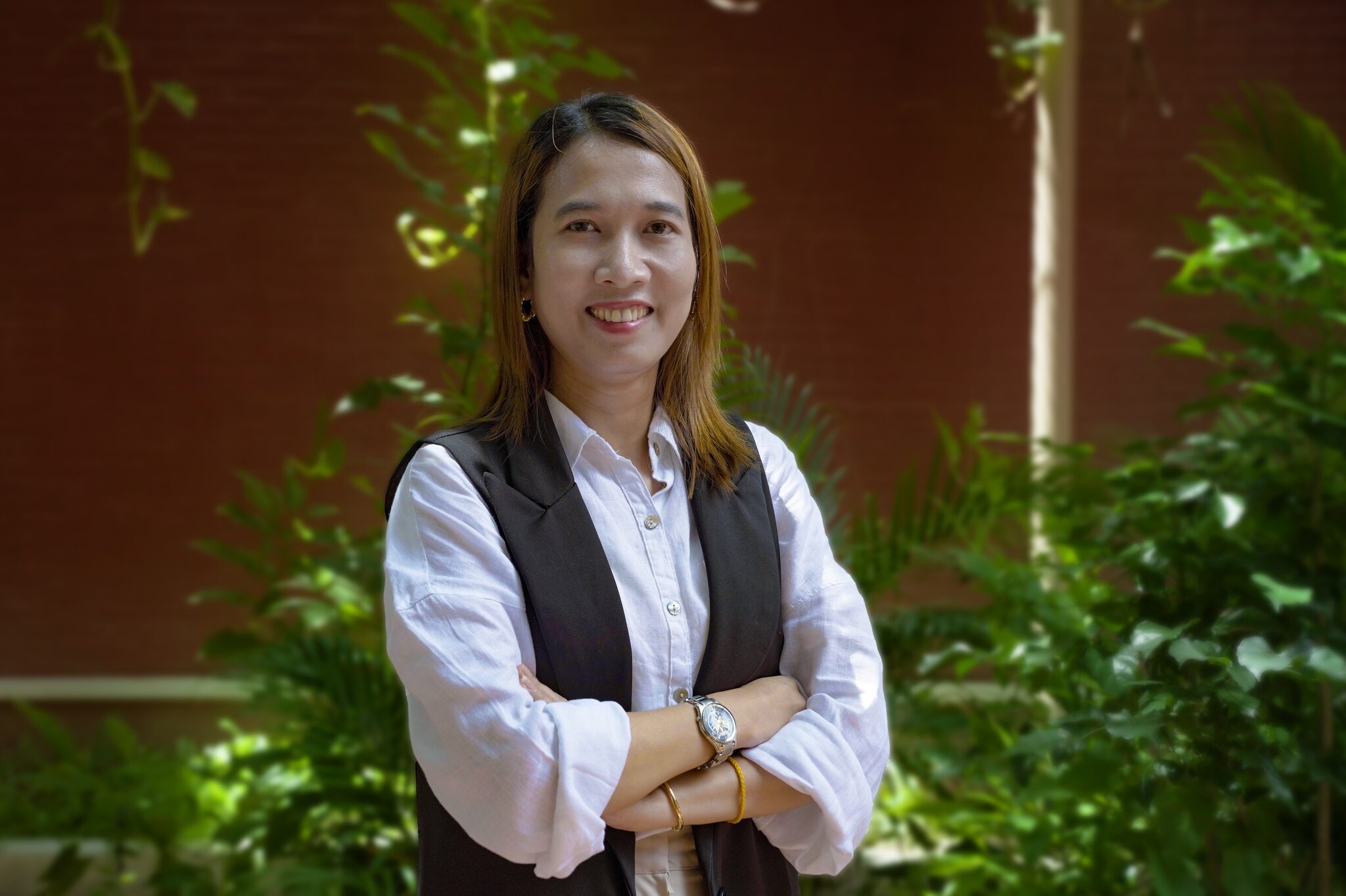
Yon Sokhorn did not grow up imagining herself as a leader in the arts. Raised in Phnom Penh’s White Building, she thought of the place simply as home, unaware that artists gathered there or that art classes quietly unfolded around her. After graduating with degrees in Education and Banking and Finance, she did what many young Cambodians do: searched for work. She humbly calls her young self simply a “fresh graduate job hunter”.
In January 2012, Sokhorn joined Cambodian Living Arts (CLA) as a Project Coordinator, without anticipating that this role and decision would shape the next 14 years of her life and eventually lead her to a leadership role within the organization.
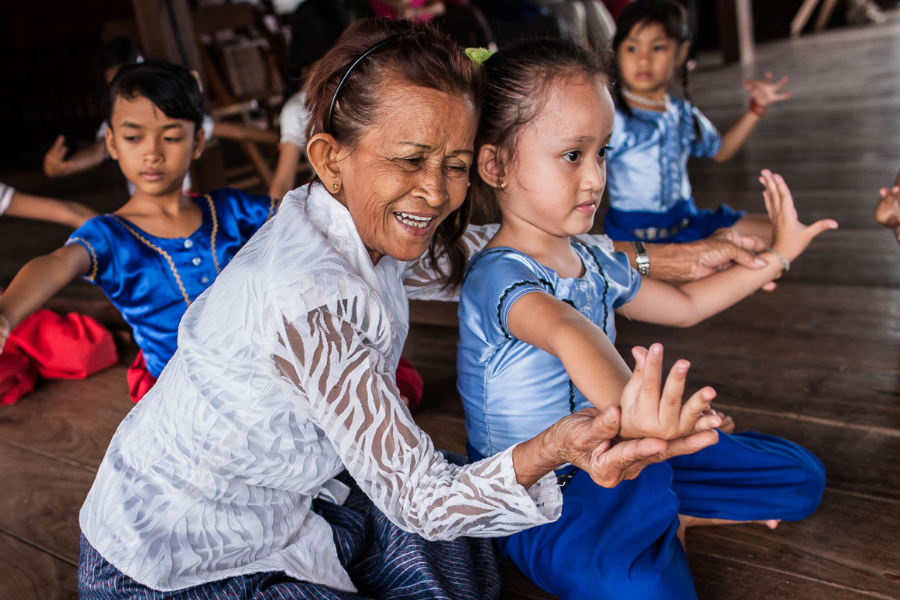
Sokhorn’s early years with CLA became formative. Traveling regularly to Siem Reap, Takeo, and other provinces, she accompanied master artists, observed rehearsals, and witnessed intergenerational transmission of knowledge firsthand. “When I started, there were about sixteen master artists,” she says. “Now there are only five or six left.” Of those years, what stayed with her was “the privilege of bearing witness” she said.
Today, as Yon Sokhorn steps into leadership with clarity, humility, and vision. Sokhorn is energized by the opportunity to reset and reimagine. As CLA enters a new phase, Sokhorn hinted at the soon to be launched five-year strategic plan from 2026 to 2030.
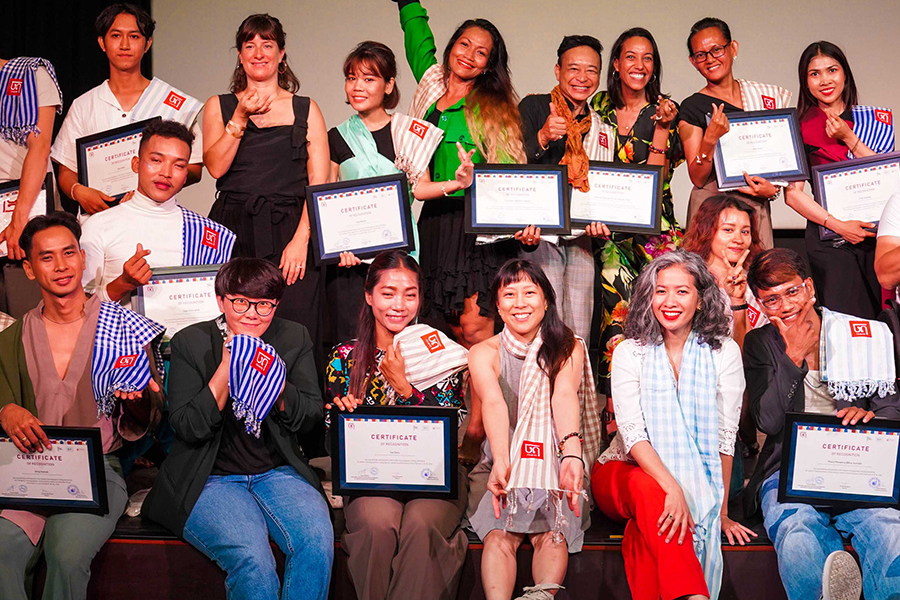
She speaks with pride about leading this moment of organisational development. Her excitement lies not only in strategy itself, but in what it enables: deeper regional engagement, expanded international outreach, and new opportunities for professional development among Cambodian artists. She envisions CLA as a bridge connecting artists to regional and global platforms, strengthening their skills beyond the local context, and paving opportunities that allow them to elevate their creative potential.
Central to this vision is her definition of partnership. In a time marked by conflicts, uncertainty, and shifting funding landscapes, she sees partnership as more than collaboration, but resilience. It resonates with an old saying that if you want to go fast go alone, if you want to go far, go together.
Beyond institutional, regional and global partnerships, Sokhorn’s vision also looks toward the future of Cambodia’s arts ecosystem itself, particularly the emerging talents, grassroots initiatives, and civil society circle, that will shape the next generation.
“I am so excited about the possibilities that the roles of arts can support the social development sector, and the social development understand the roles of arts, vice versa,” she explains. Fourteen years ago, Yon Sokhorn remembers a very different landscape. Emerging art collectives were rare, and initiatives like today’s Festival of Ideas had yet to take shape.
Sokhorn is keenly aware that the next chapter of Cambodian arts will be shaped by new generations and new tools. She speaks openly about her curiosity and openness toward emerging technologies, including Artificial Intelligence (AI). Generation Z and Generation Alpha, she notes, are proactive, digitally fluent, and fast-moving. They have unprecedented access to information and global conversations, but often less opportunity for the deep, real-time interaction. Supporting them, she believes, requires institutions to learn alongside them. “We need to build our own capacity and be smart to work with them,” she says, embracing new approaches, perspectives, and ways of working that reflect how younger artists navigate the world.
Passing The Torch
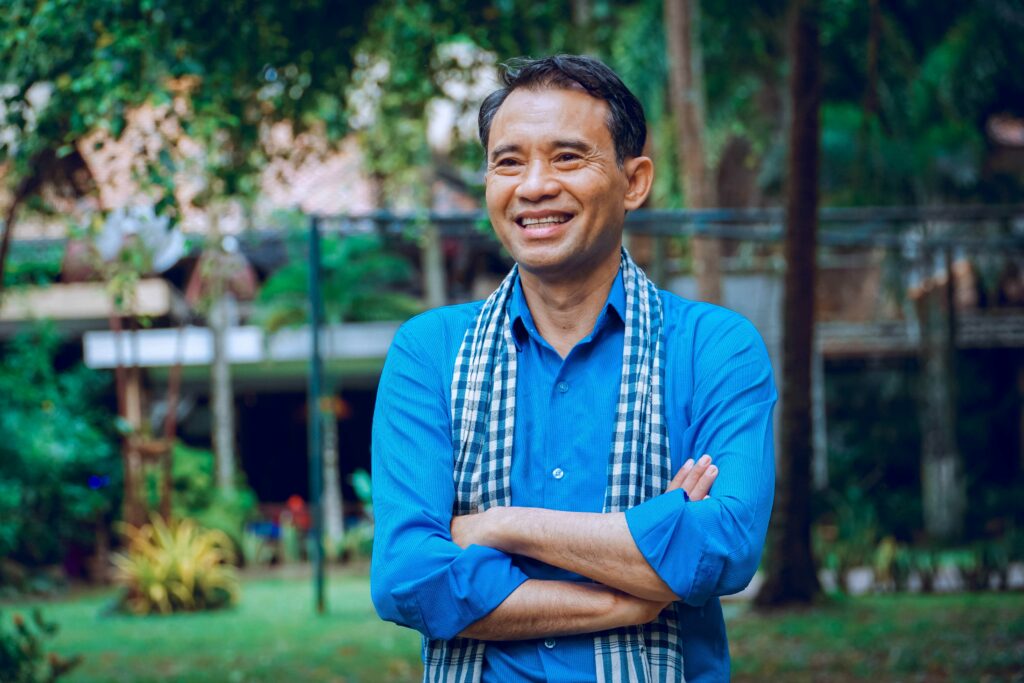
Arn Chorn Pond reflected on this transition as a model CLA could be most proud of, and one he hoped would offer a lesson to society. “War, conflict, and genocidal regimes can dismantle a country in the span of a few years; rebuilding its people and institutions can take decades,” he said. For a long time, Cambodia—and by extension Cambodian Living Arts—was framed as a product of the postwar era, marked by corruption and loss, a perception he found deeply painful. Challenging that narrative became part of his mission. Today, he sees that effort as a success: proof that a country, and its cultural life, can be rebuilt through patience, persistence, and belief in human potential.
“As the founder, I want to take this moment to express my gratitude to our first executive director, Phloeun, his colleague Frances [Rudgard], and all the staff who have been willing to learn, to support one another, and to work from the heart. I have not always taken the time to say this publicly, but I want to do so now. I am deeply thankful to all those who have supported Cambodia Living Arts over the decades—through financial contributions, and through the belief of friends and family who have stood by the organization’s mission.”
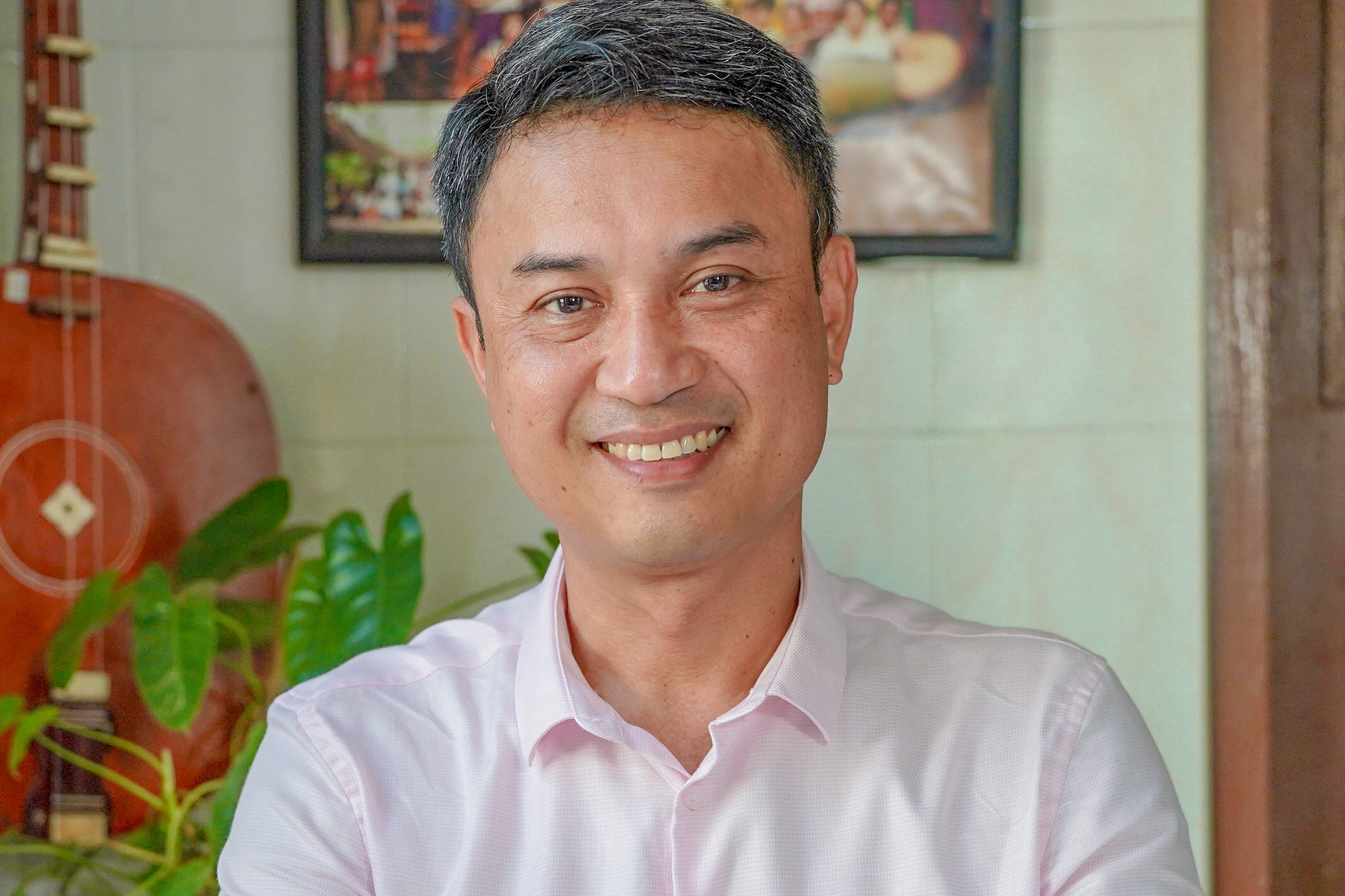
Prim Phloeun spoke of a proud moment in the evolution of an organization where success is measured not by individual achievement, but by the collective effort that allows CLA to endure beyond the tenure of any single leader.
Prim Phloeun lauded Sokhorn’s new leadership, remarking, “I am very excited about this transition, as often organizations are caught up with founder syndromes, where it’s very difficult to nurture new leadership. But in our case, I think we had really done this transition very well. I am very proud that Sokhorn can step up to become the [new] director. We have built a strong foundation, and now a second generation of local leadership can take this organization forward.”