
Medha’s Red River Brings Women’s Stories of Resilience to Cambodia’s Provinces
Written by: Sokummono Khan
Edited by: Elise Steenburgh
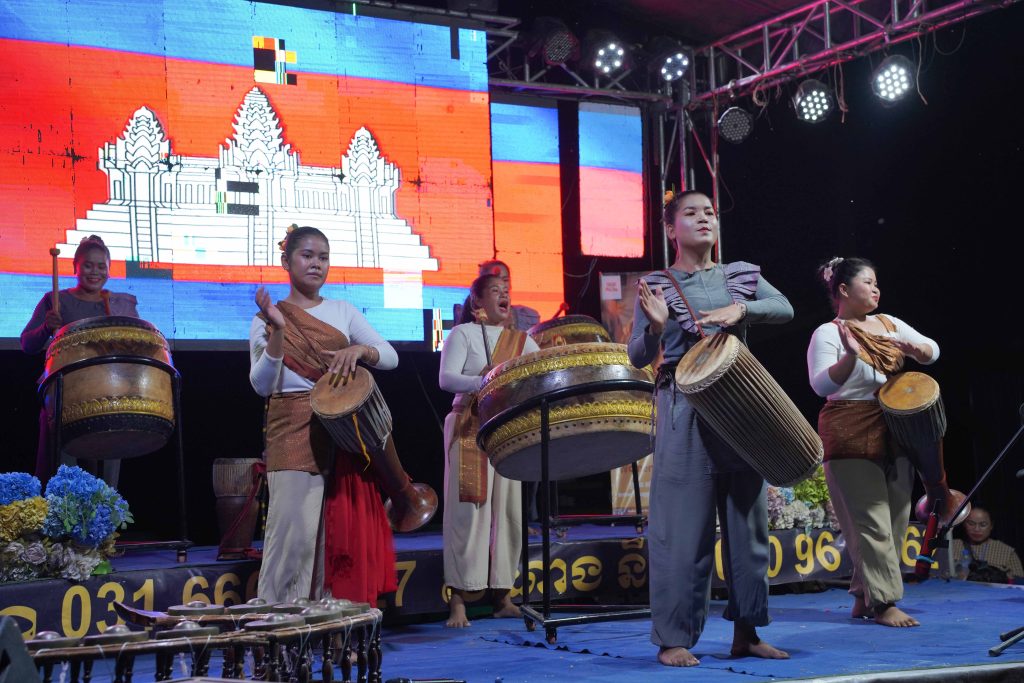
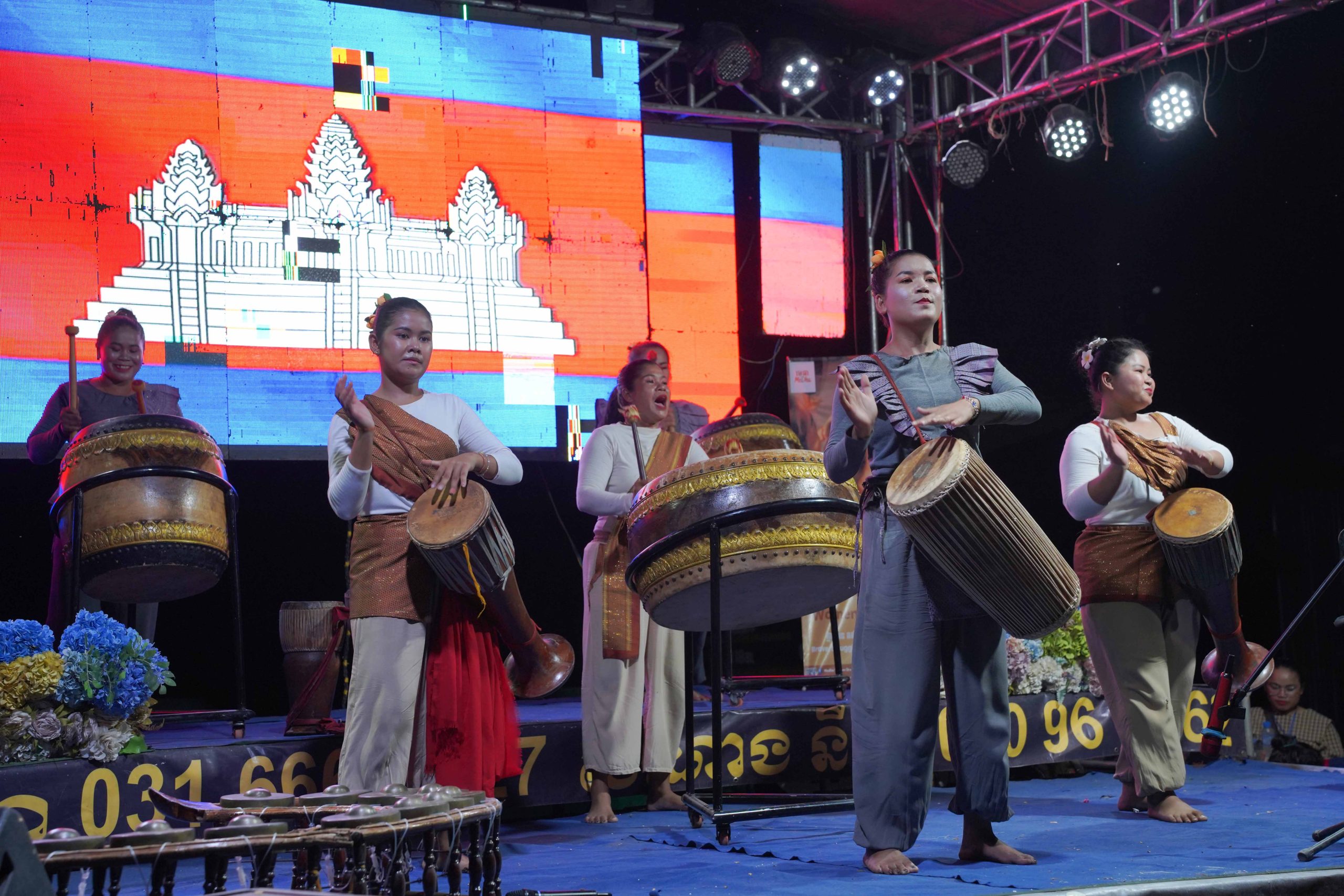
Medha never fails to send goosebumps through their audience.
The all-women drum troupe’s debut performance, The Call, whichhas become one of Medha’s most iconic works within Cambodia’s contemporary arts scene,begins with a low, humming invocation before slowing, thunderous drumbeats gradually rise behind it.
The all-women drum troupe’s debut performance, The Call, has become one of Medha’s most iconic works within Cambodia’s contemporary arts scene. It begins with a low, humming invocation, followed by slow, thunderous drumbeats.
Their latest powerful new creation work, Red River, was performed for four communities in Prey Veng and Svay Rieng provinces from 3 to 9 April 2026, in the week leading up to Khmer New Year. During Cambodian Living Arts’ (CLA) Provincial Cultural Tour, Medha performed for diverse crowds of villagers, including young people, adult, and local officials. Many of these audience members were deeply moved by a performance that encouraged reflection on women’s resilience and collective strength.
“The community had never encountered anything like this before,” said Sar Sophay, a community leader.
For Sophay, Medha’s performance offered the community a new artistic experience — what he described as ‘new food’ for the emotions. While many people were familiar with modern pop concerts or traditional performances such as Lkhon Bassac (Cambodian folk theatre and opera), contemporary performance was something new.
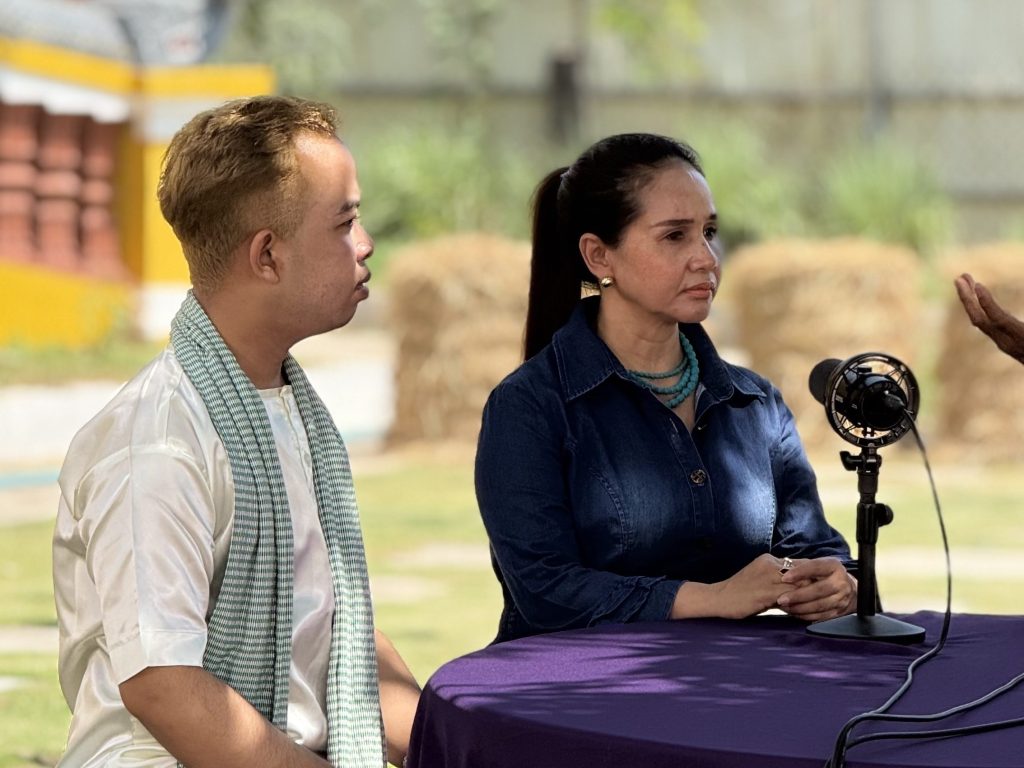
“During this provincial cultural tour, I also witnessed a meaningful connection between urban and local artists. Two local troupes from our own province, one was a student artists’ troupe and the other from the provincial Department of Culture and Fine Arts, were included in the program alongside the artists brought by CLA,” he reflected.
When Mao, Pheak, and seven other women performed Red River, they brought audiences into the experiences of women living along Cambodia’s riverbanks during the COVID-19 pandemic.
The performance tells the story of a woman who fished with one hand while carrying her baby over her shoulder, secured with a krama, as she navigated the river to bring food home for her family or sell her catch to meet daily needs.
That was how Men Mao, a single mother, lived during those years. Red River is not just a performance for her; it is her truth. This is why when she performed across schools and pagodas to a total of about 20,000 audiences in a week, she felt it to her core, as though she was being carried back to the riverbanks of those difficult times.
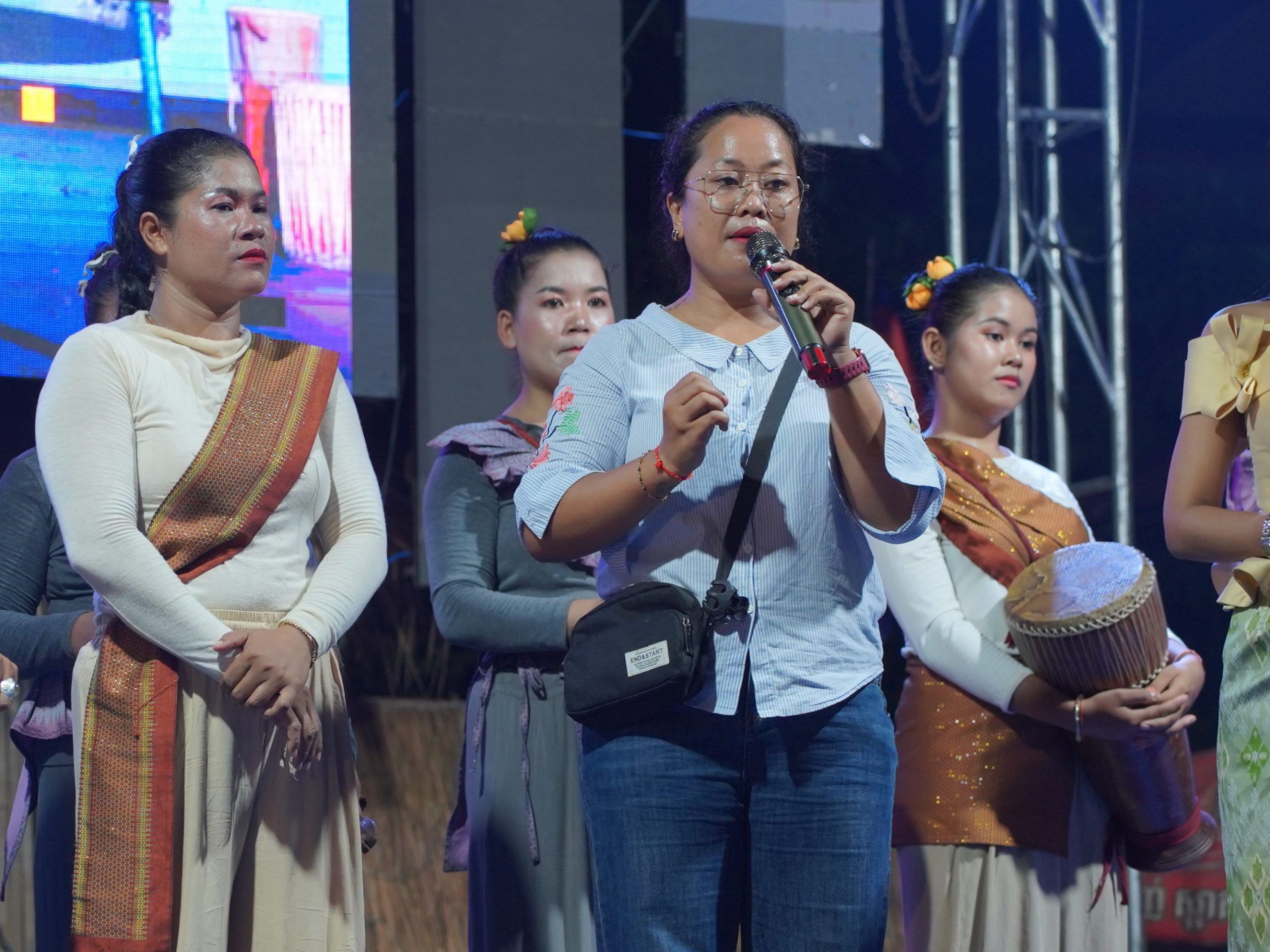
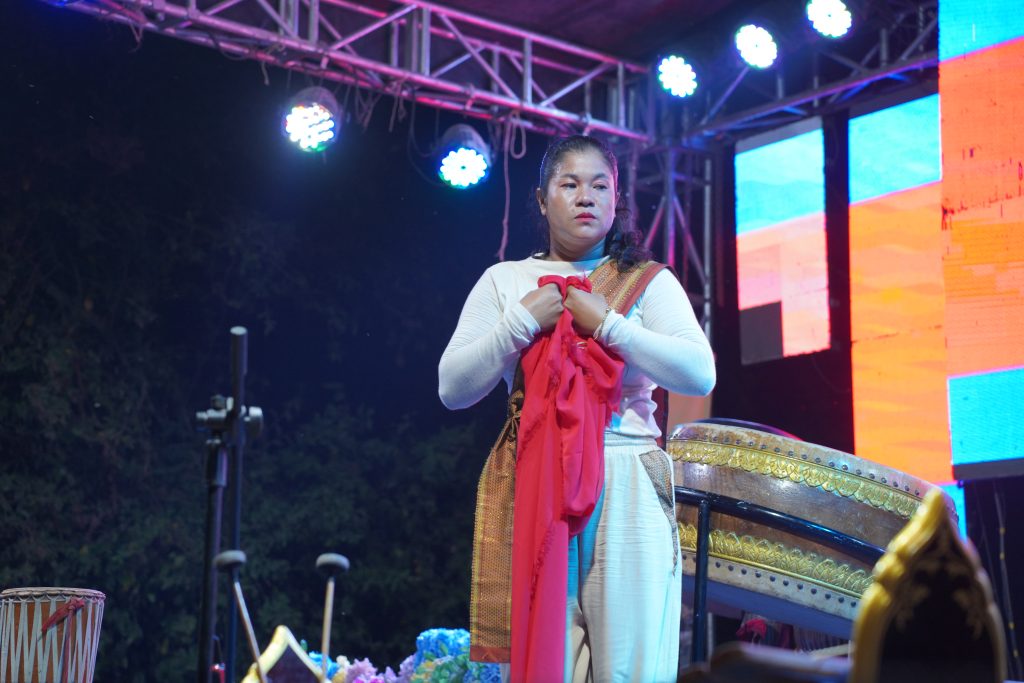
“It’s too real for me. Every time I carry the net on stage, it takes me back to the river, except that my child is not there with me. I think about him during my performance, and I become deeply emotional. This is what makes Red River different from any performance I have done before,” Men Mao said.
“Red reminds us of the time when we were living through lockdowns and many areas were labelled as Red Zones,” Keo Pheak explained.
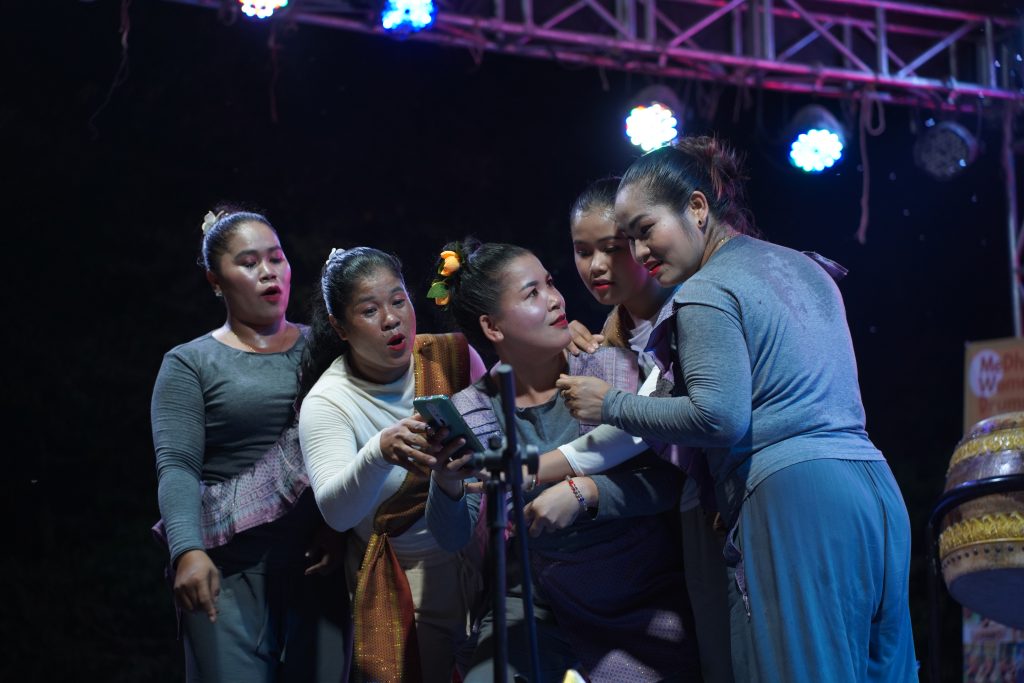
Created collaboratively by nine women including Keo Pheak, Men Mao, Sovan Chansompors, Cheung Pheak, Preng Prom, Vay Savorn, Kroch Pop, Ngek Siela, and Lam Dalen, Red River also represents strength and determination.
“Red is also the colour of strength and success.” Pheak added.
Creating contemporary performance requires time, resources, and commitment. For Medha, support from CLA’s New Creation Grant helped the troupe continue developing this work. Beyond financial support, CLA worked alongside Medha by providing guidance, connection, and opportunities to share their performance with wider audiences.
For a troupe working with large drums and complex instruments, continuing artistic work requires dedication. Many Medha members also balance their roles as mothers and primary breadwinners. For them, the grant represented more than resources. It reflected a belief in their artistic voices and in the importance of stories created by Cambodian artists.
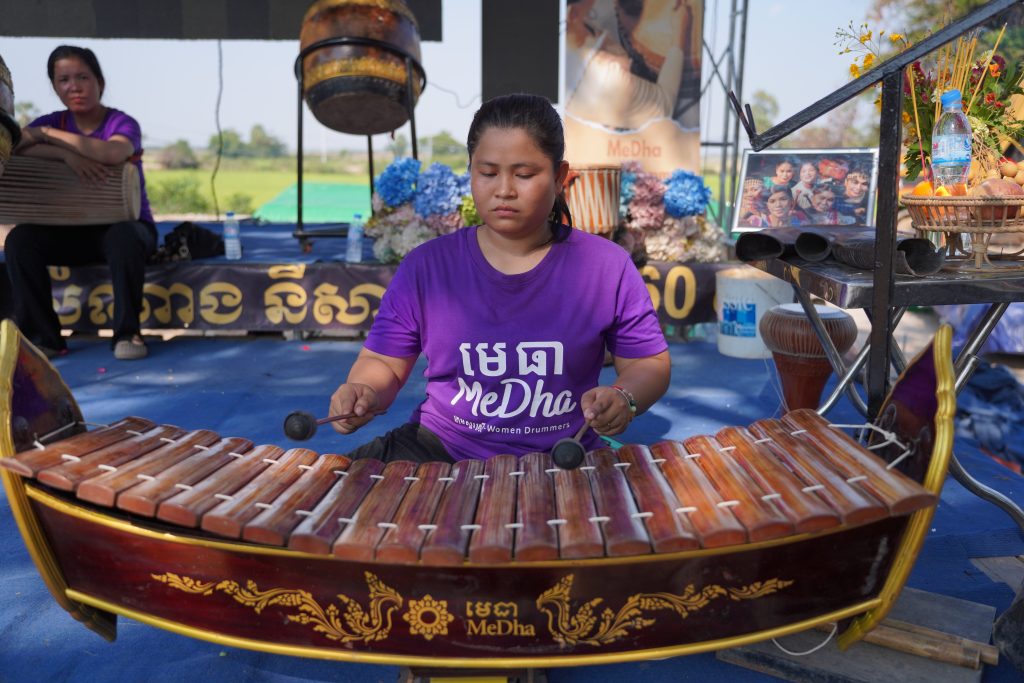
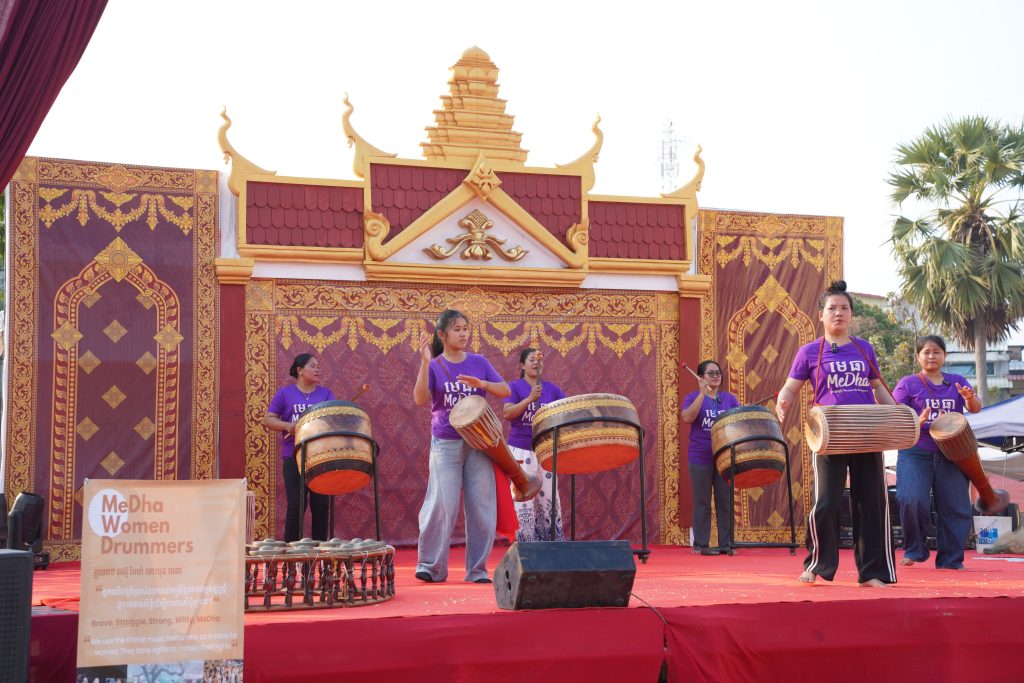
The impact of the Provincial Cultural Tour is not limited to the artists alone. Sar Sophay strongly believes it transforms audiences as well. As someone from the local community who helped make the week-long Provincial Cultural Tour possible, he was deeply moved watching the performers take the stage.
“Their drumbeat gave us goosebumps… If one was upset during the day, those beats could make it disappear,” he said, describing the uplifting moment when he could sense the feminine strength from the women drummers.
Seeing Medha perform, felt like a full-circle moment for Sophay, transporting him back to his childhood, when a traditional art performance from Phnom Penh once came to his province almost a decade ago. He remembered it very well because it had influenced him to pursue an arts degree after graduating from high school. He now serves as an officer at the provincial Department of Culture and Fine Arts.
He said that the transformative power of performances like Medha’s is something he believes will similarly inspire today’s young people, especially high school students and young women who can find strength through such artistic expression.
“I wouldn’t be working in the arts today without a performance in my village during my school years,” he said. “Seeing children and villagers enjoy performances like this makes me think about my own journey. I believe that if more tours like this reach remote provinces, there will be more kids like me in the future. It truly can change the way we understand contemporary arts.”
In Cambodia, where gender norms have shaped women’s roles in public and professional life, all-women drum troupes like Medha hold significant views on social change. They challenge long-standing stereotypes that women should remain confined to domestic or subordinate spaces, instead placing women visibly at the centre of cultural leadership, storytelling, and social transformation. Through performance, Medha not only amplifies women’s lived experiences but also demonstrates women’s power and resilience within communities where such representation remains limited.
The Provincial Cultural Tour matters for CLA because it challenges the perception of art as solely a form of entertainment. It brings contemporary arts beyond traditional stages and into communities, creating opportunities for people to experience, reflect, and engage with ideas that connect to their everyday lives.
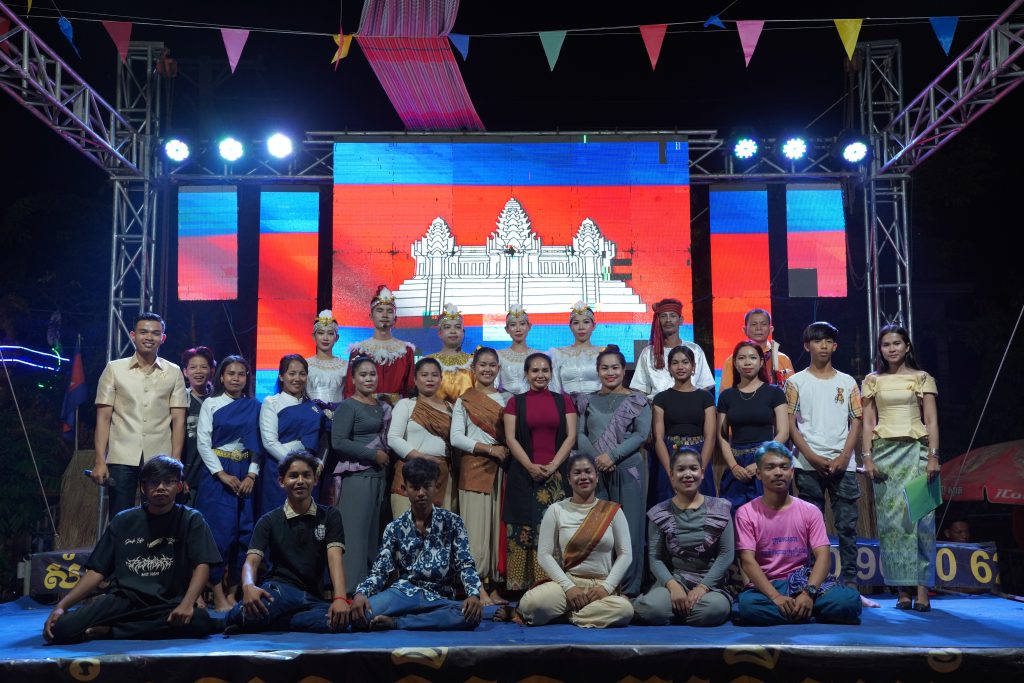
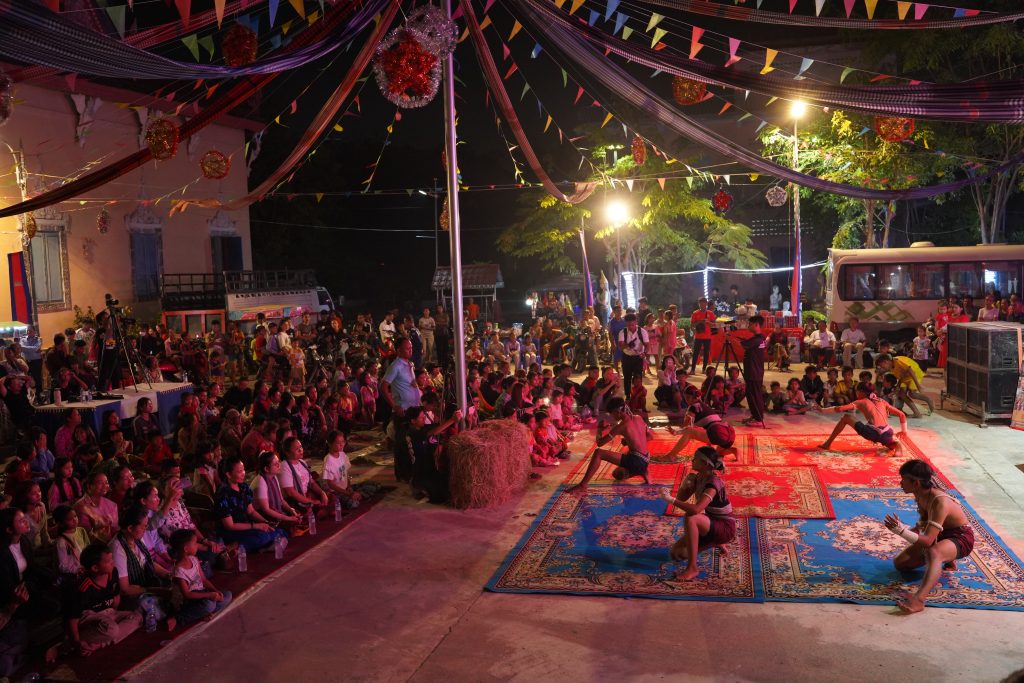
“I was moved by the way people in these communities came together to help us make it happen. They did not only come to watch the performance; they came with their hearts. Seeing their participation and the way they connected with the artists made me feel deeply satisfied,” said Thon Seyma.
This year, we have focused primarily on schools, intentionally creating opportunities for young students to encounter contemporary arts and use these experiences as a starting point for dialogue around gender equity, social change, and community issues. In rural areas, where access to these conversations and artistic experiences remains limited, the tour creates a meaningful space for young audiences to think critically, exchange perspectives, and imagine new possibilities through art.